Bellezza d’Italia : the lifestyle magazine art-directed by Franco Grignani

Bellezza d’Italia, no. 1, 1947

In the post-war years, in an Italy eager for renewal and beauty, Franco Dompé took up the cultural legacy of his father Onorato, recognising corporate communication as a privileged space for engaging with contemporary culture. Thus, in 1947, Bellezza d’Italia was born — a pioneering editorial project with a dual purpose: to offer Italian doctors, its primary audience, a cultured and enjoyable reading experience, and, at the same time, to promote Dompé products in an innovative way.
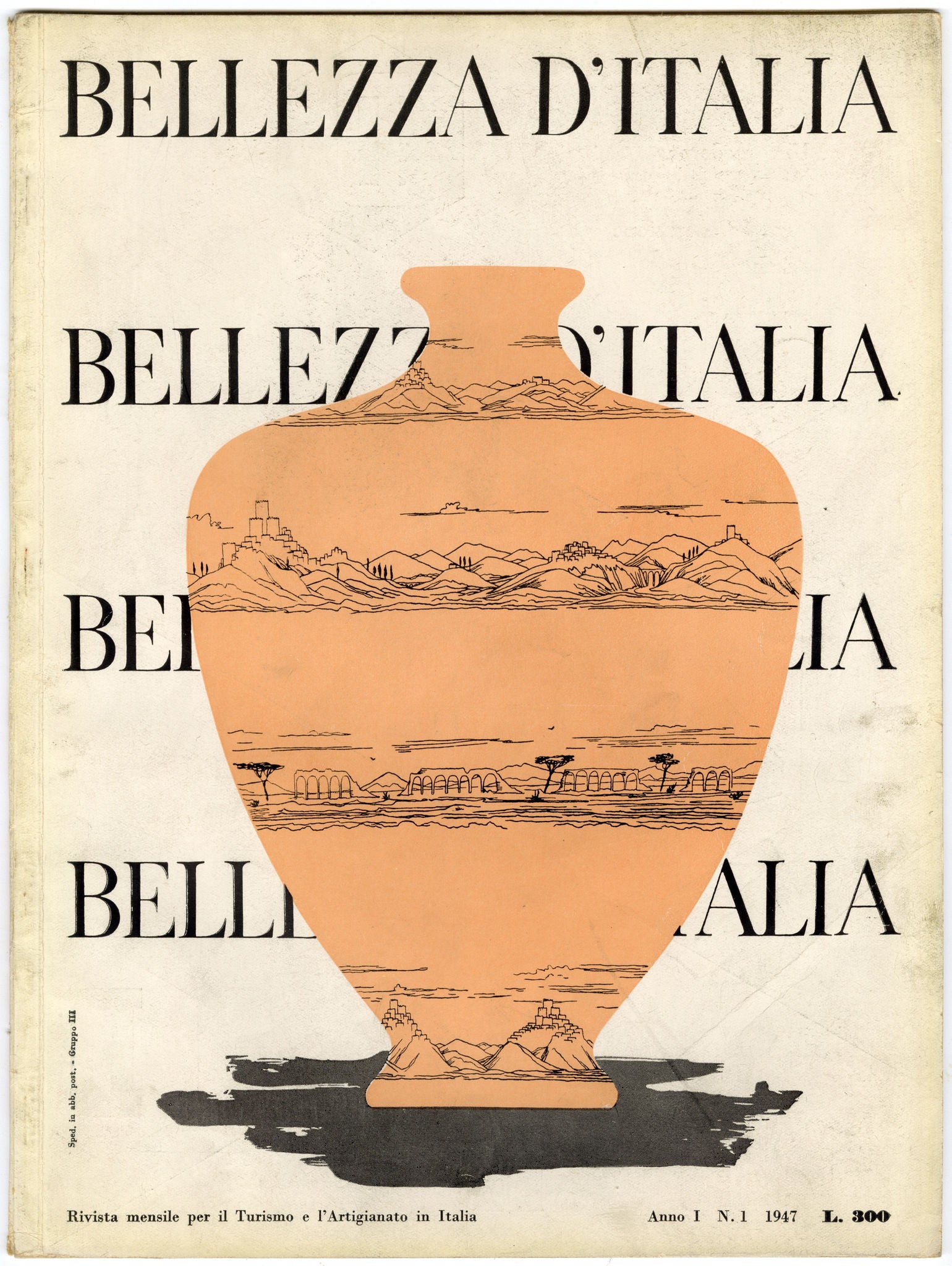
The editorial aims were outlined in the accompanying letter of introduction, in which the company expressed its desire to offer members of the medical profession a form of cultural entertainment: “We would like […] to brighten, even just for a moment, the difficult day of our Doctor, offering him the chance to take a quick and effective look at the most interesting developments taking place on a daily basis in both the artistic and cultural fields”.

A bridge between pharmaceutical science and lifestyle

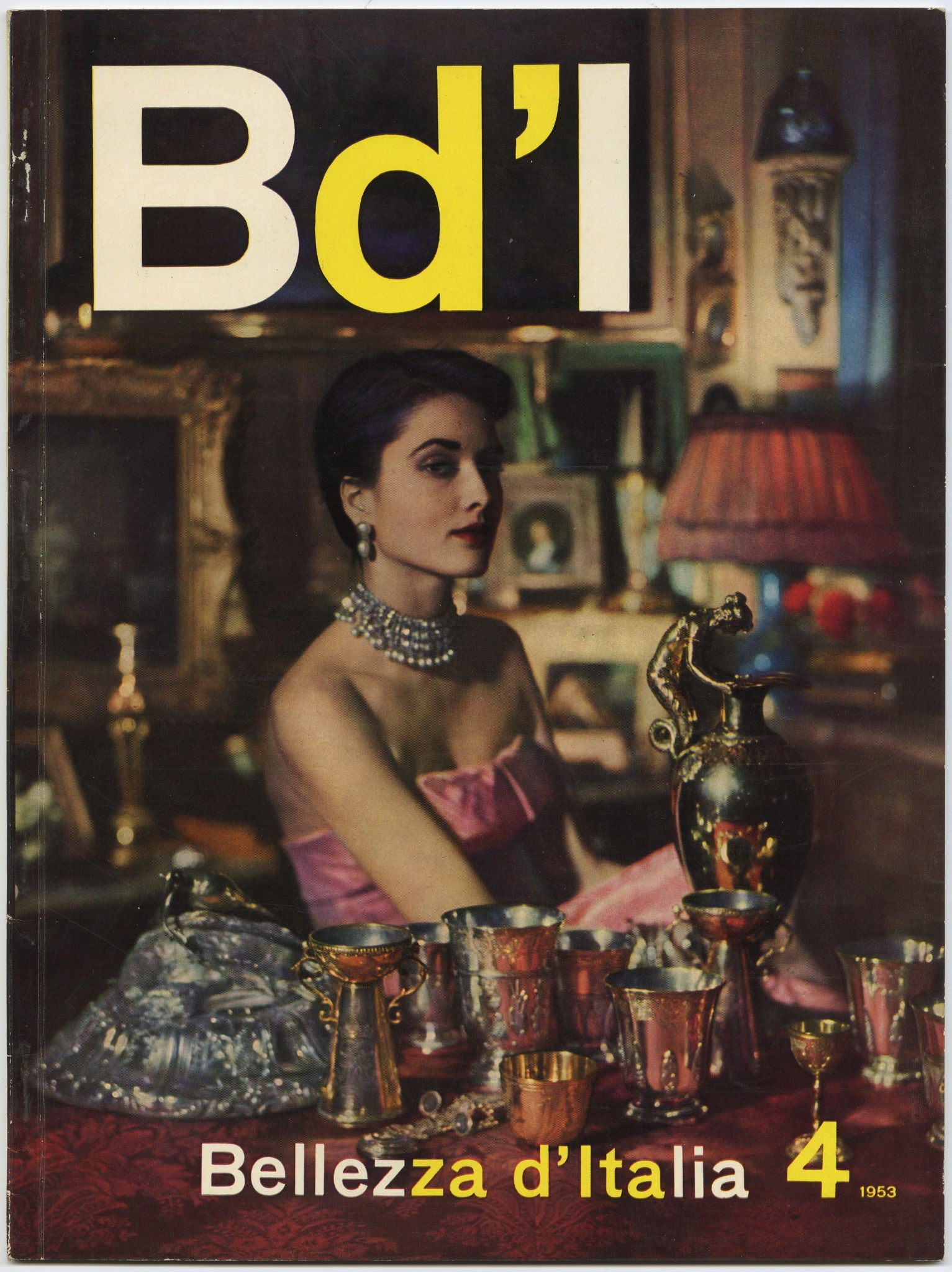
Bellezza d’Italia, n. 4, 1953

Initially printed by L’Editrice at 6 Via Fieno in Milan, the publication quickly established itself as a refined illustrated magazine. From issue 5-6 of 1948, its editorial offices moved to 12 Via San Martino. Although it began as a “magazine for Tourism and Crafts in Italy”, from 1952 onwards it expanded its scope to explore “modern life”, ranging from art and fashion to theatre and sport.

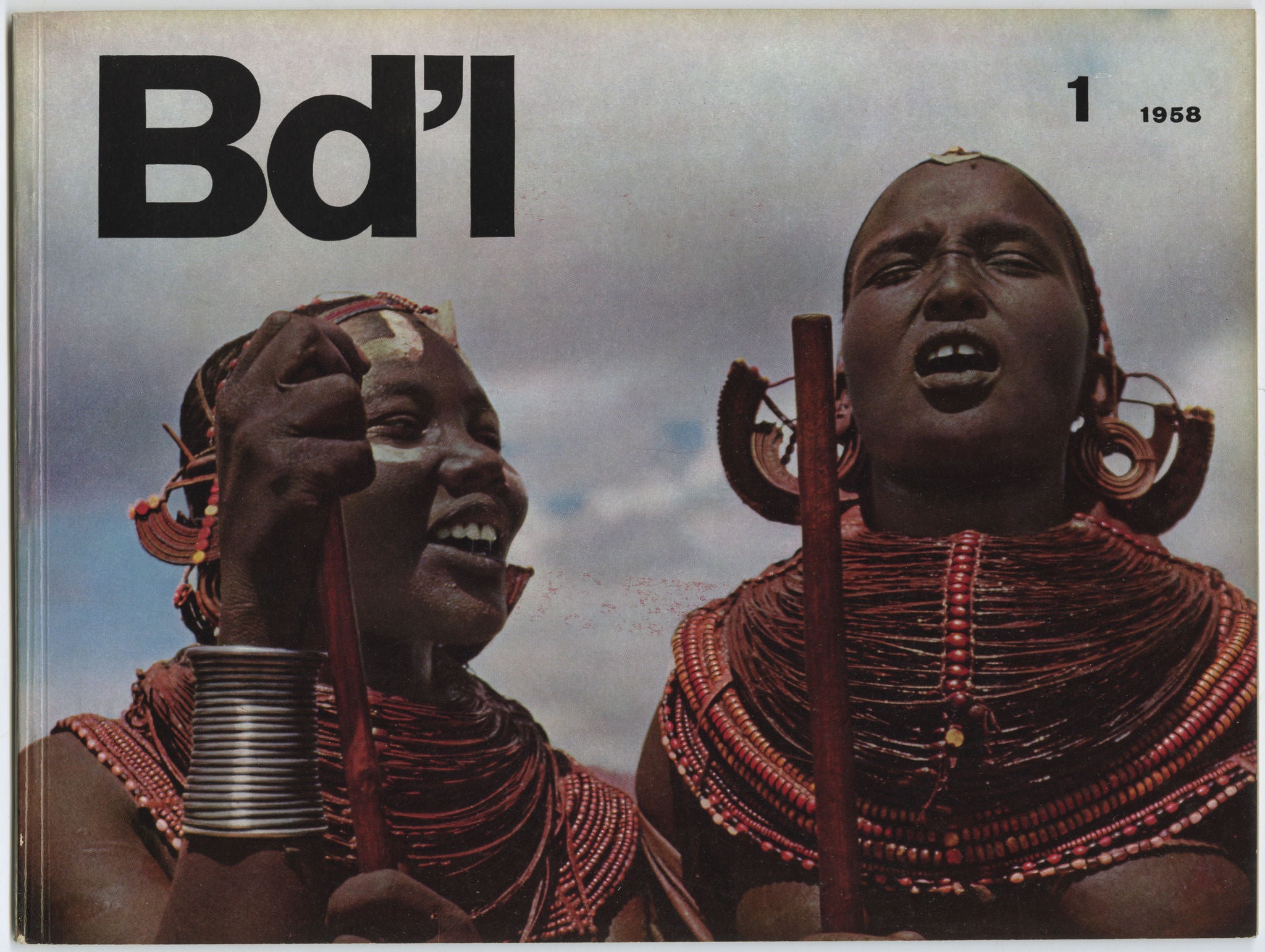
Bellezza d’Italia, no. 1, 1958, Selvaggio Equatore

Travel remained a central theme, but, despite the title suggesting otherwise, the articles extended beyond national borders, taking readers on a journey of discovery and building a bridge between pharmaceutical science and the wider world of lifestyle.

The special issue Selvaggio Equatore (“Wild Equator”) in 1958 marks a turning point in the history of the magazine: curated entirely by Lino Pellegrini, author of both the texts and the impressive iconographic apparatus, it inaugurates a new editorial path that prioritises major international and nature-focused reportage.

Exceptional contributors

The pages of Bellezza d’Italia were enriched by an exceptional group of contributors, including leading authors such as Dino Buzzati, Indro Montanelli and Camilla Cederna, as well as poets of the caliber of Salvatore Quasimodo, Giuseppe Ungaretti and Umberto Saba. The visual dimension was equally central: from 1951 to 1961, art direction was entrusted to Franco Grignani, an architect and designer of remarkable modernity, responsible during those years for campaigns and logos that would become iconic.

A new advertising language

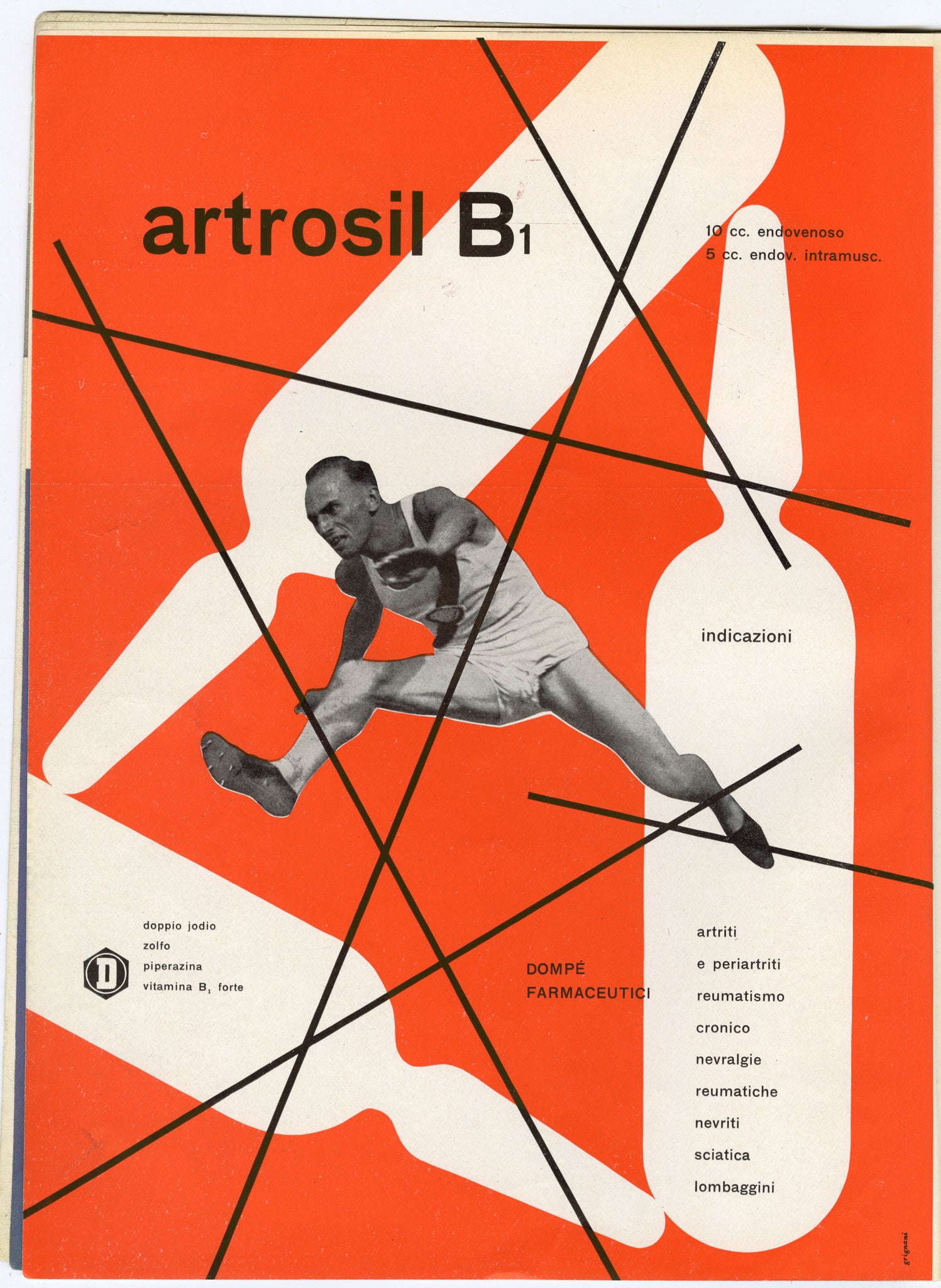
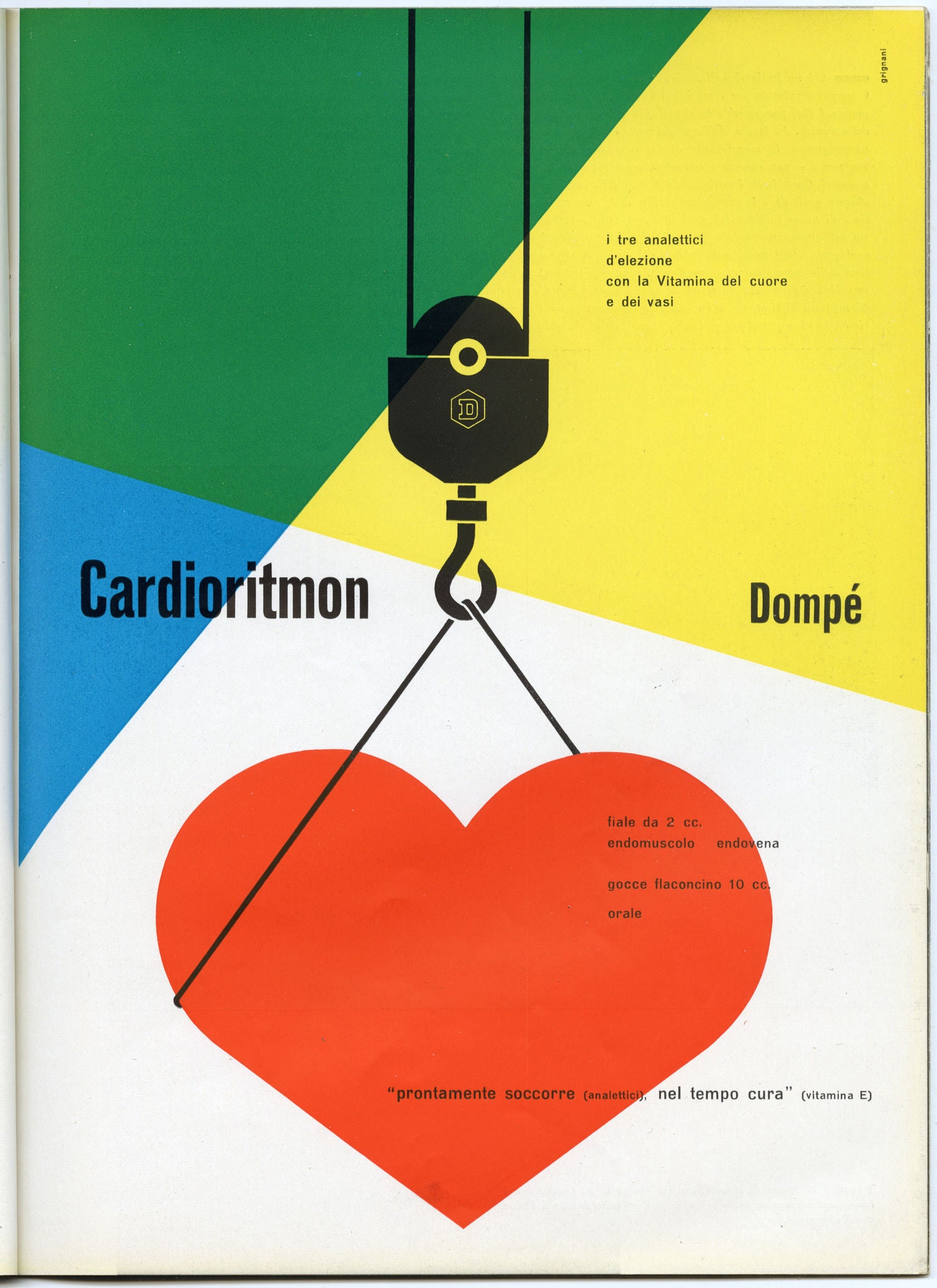
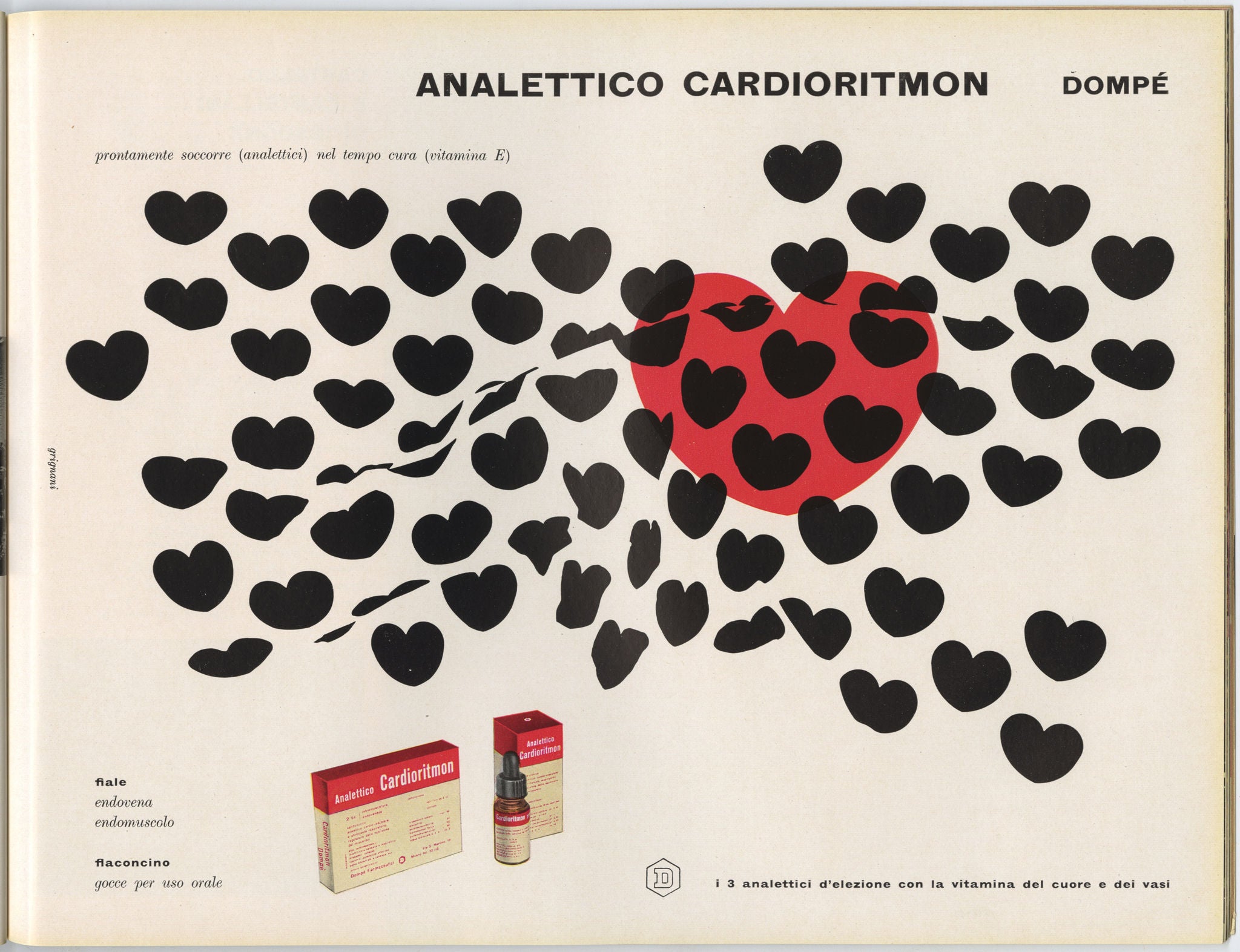
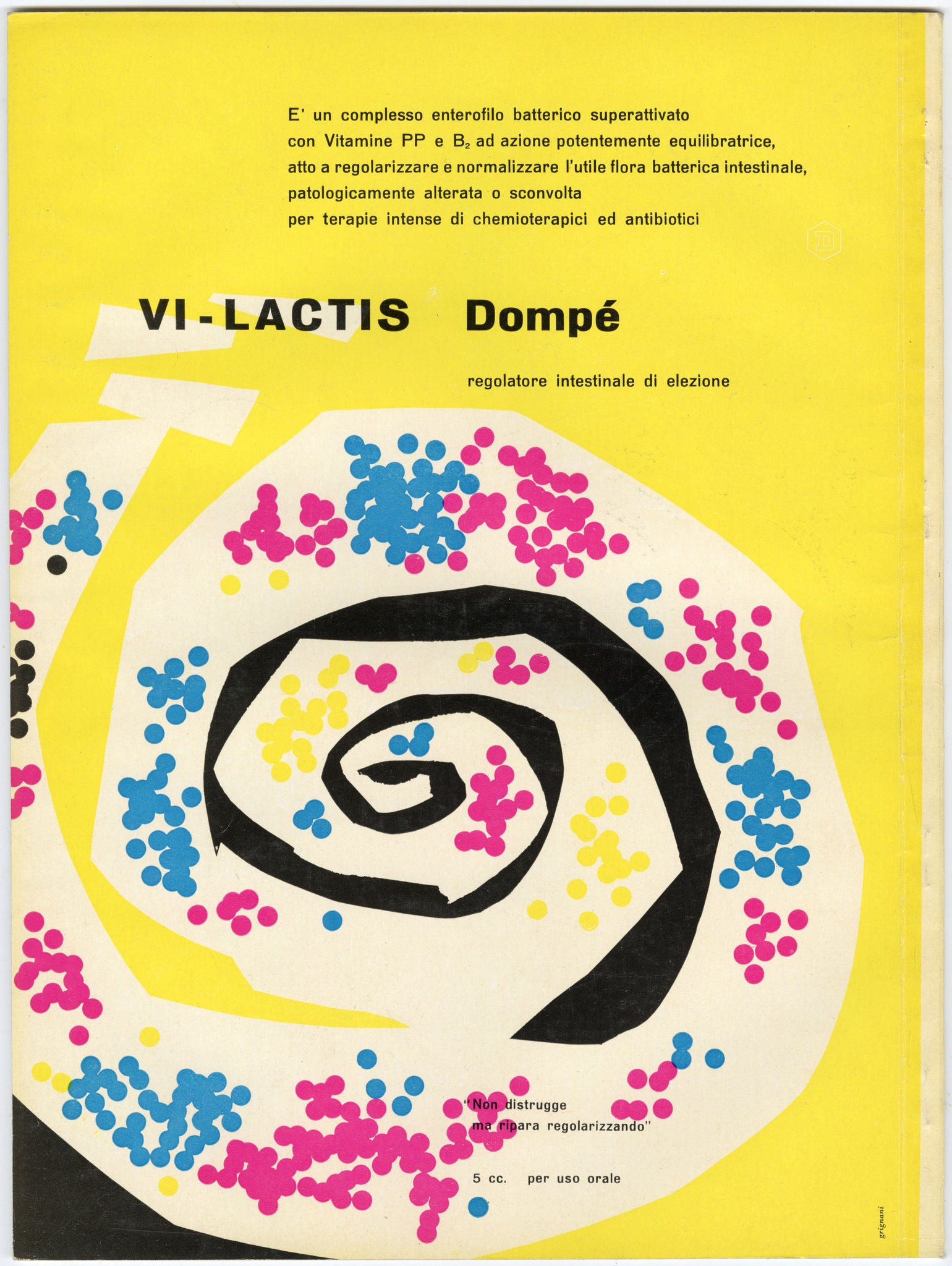
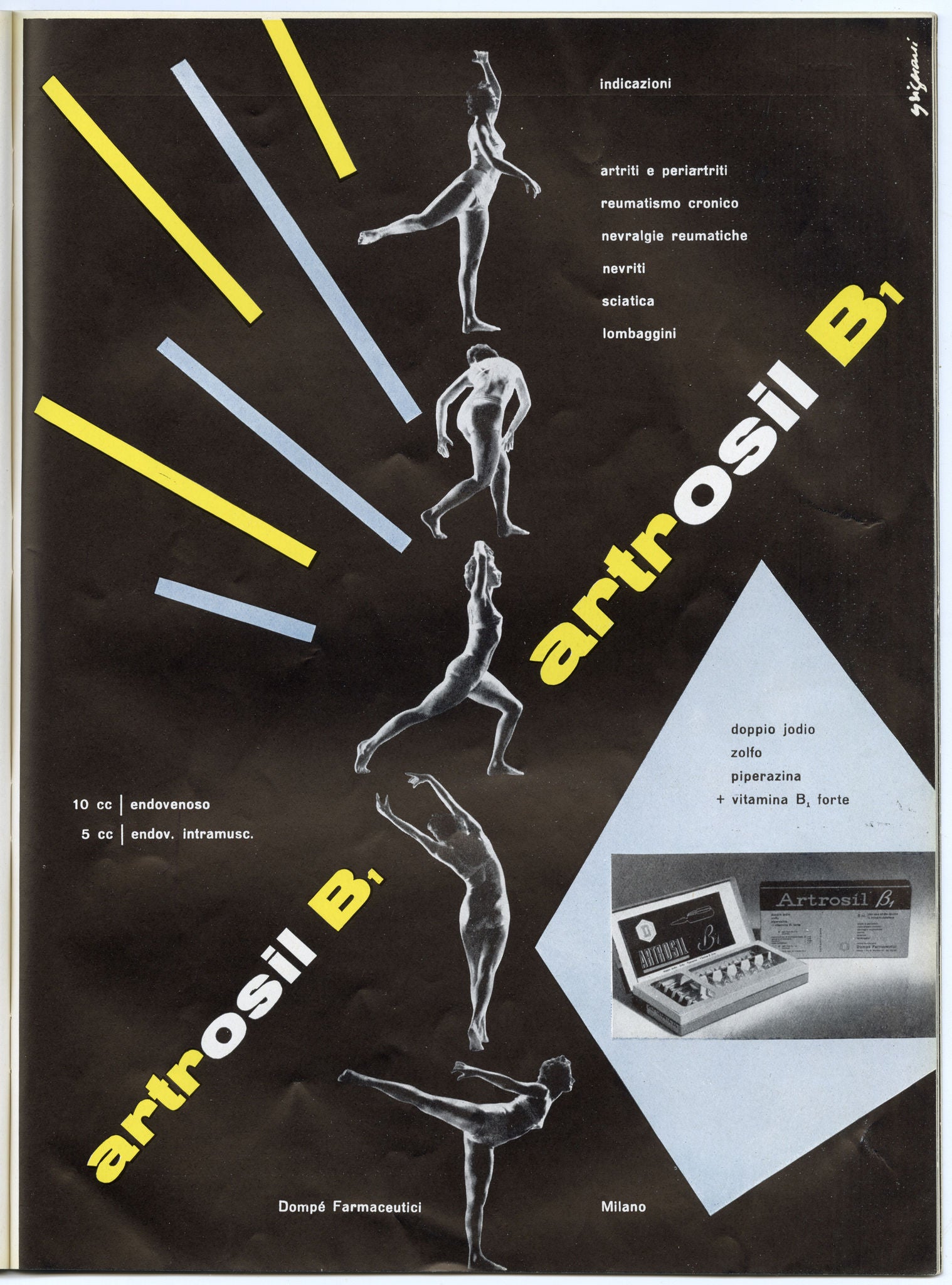
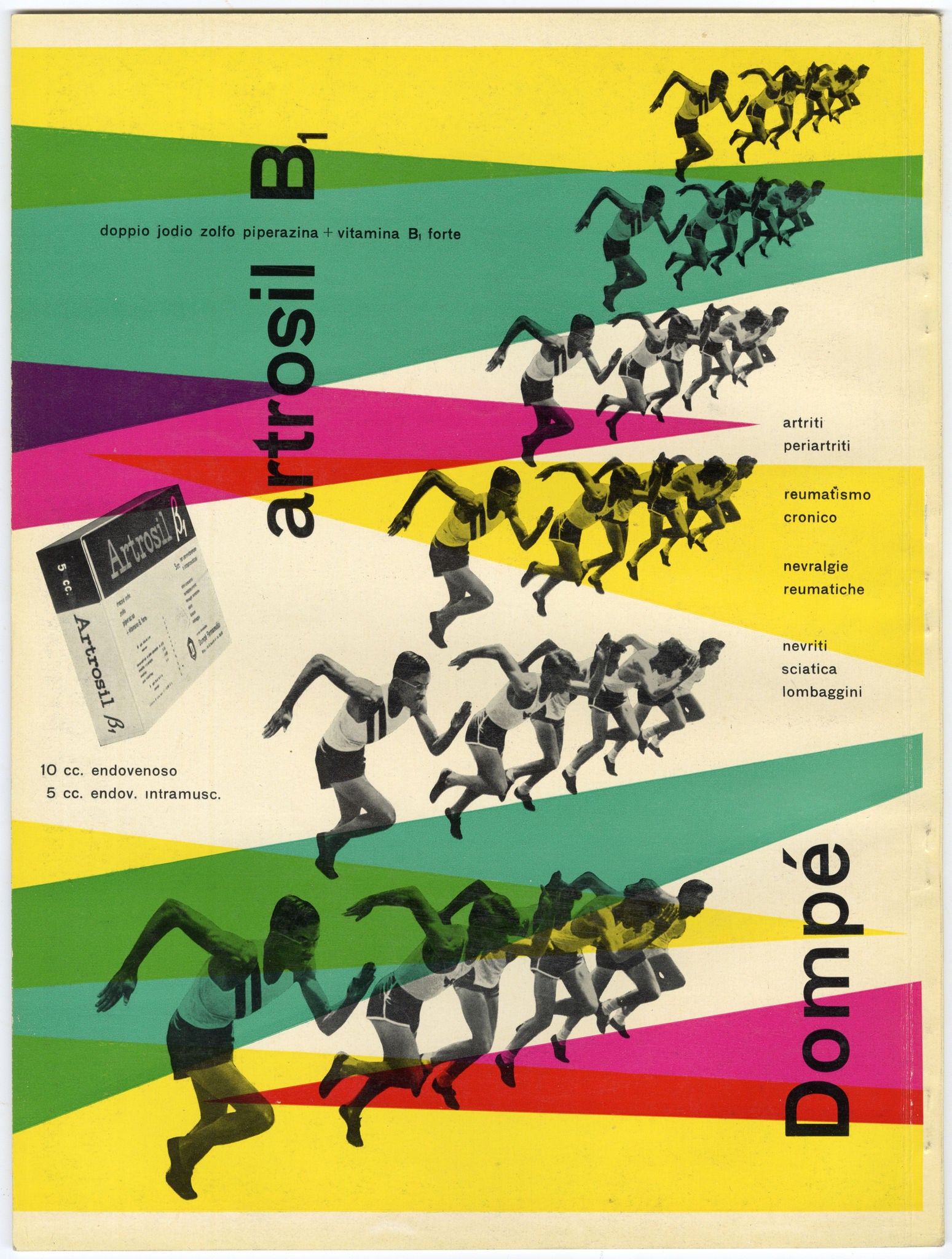
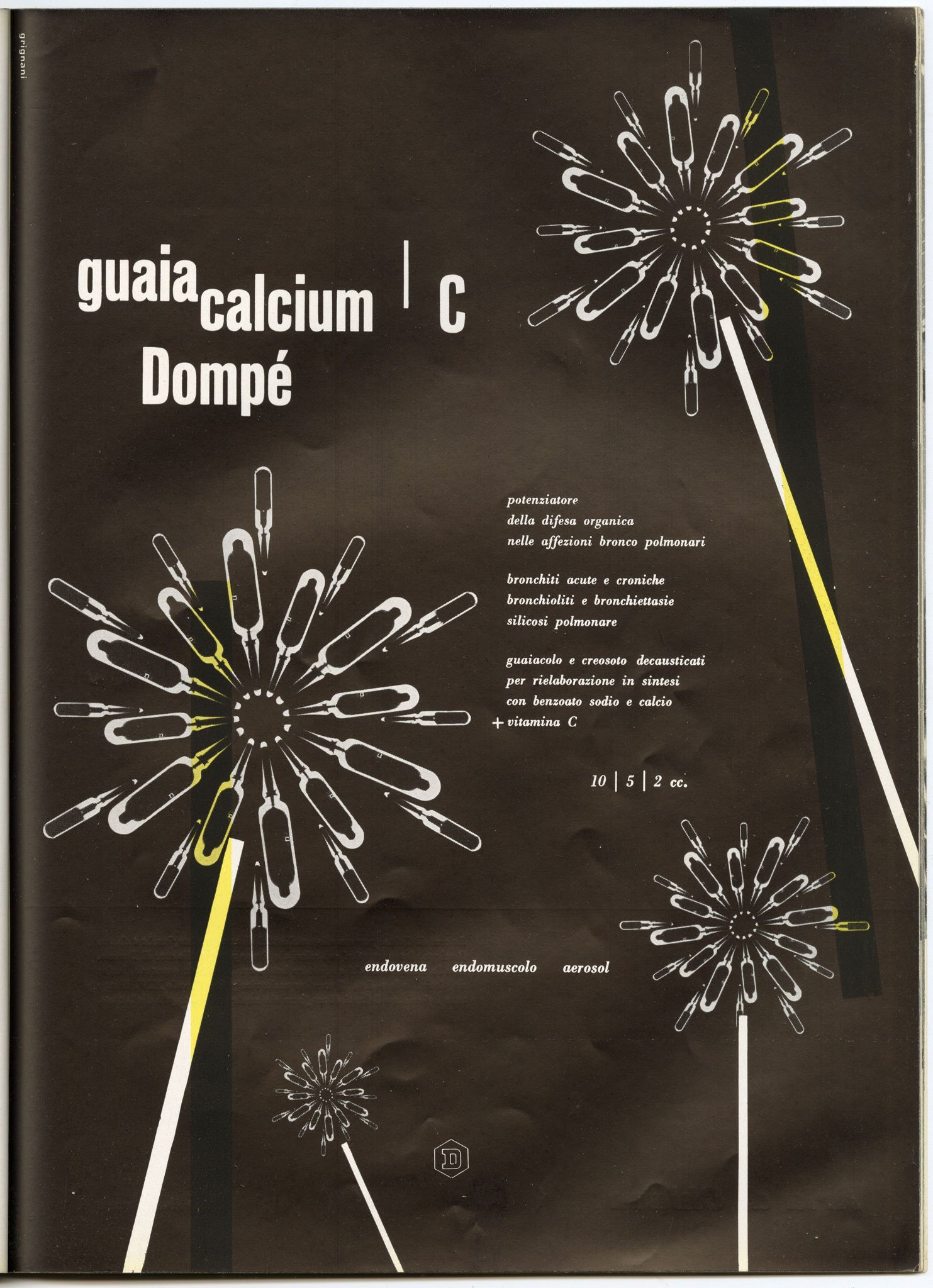
Grignani profoundly renewed the visual language of Dompé’s advertising, introducing bold visual metaphors and symbolic imagery, such as the agility of ballet set against paralyzing pain, butterflies in flight as a counterpoint to cardiac distress, and the silhouettes of vials and syringes transformed into elegant neo-floral motifs.

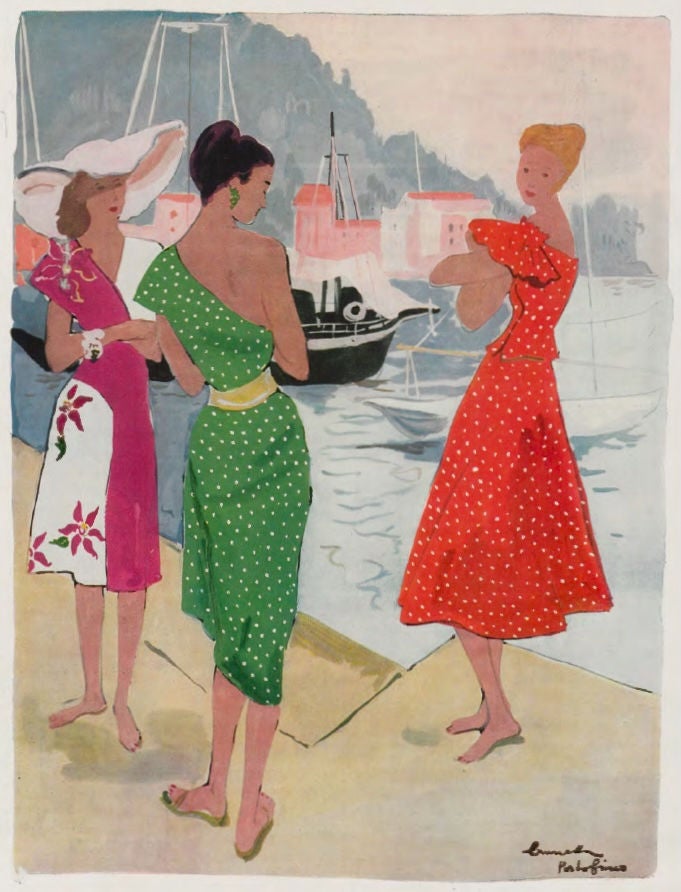
The image visually translates the effectiveness of the product: a biological microcosm becomes a graphic synthesis and therapeutic promises are enhanced by a dynamic, modernist layout. He engaged talented illustrators like Fulvio Bianconi, Bruna Moretti (aka Brunetta) and Jeanne Grignani, his wife. The magazine’s pages were further enriched by the work of leading Italian photojournalists such as Federico Patellani and Fosco Maraini, as well as international masters including Henri Cartier-Bresson and Robert Capa.

A magazine open to the world

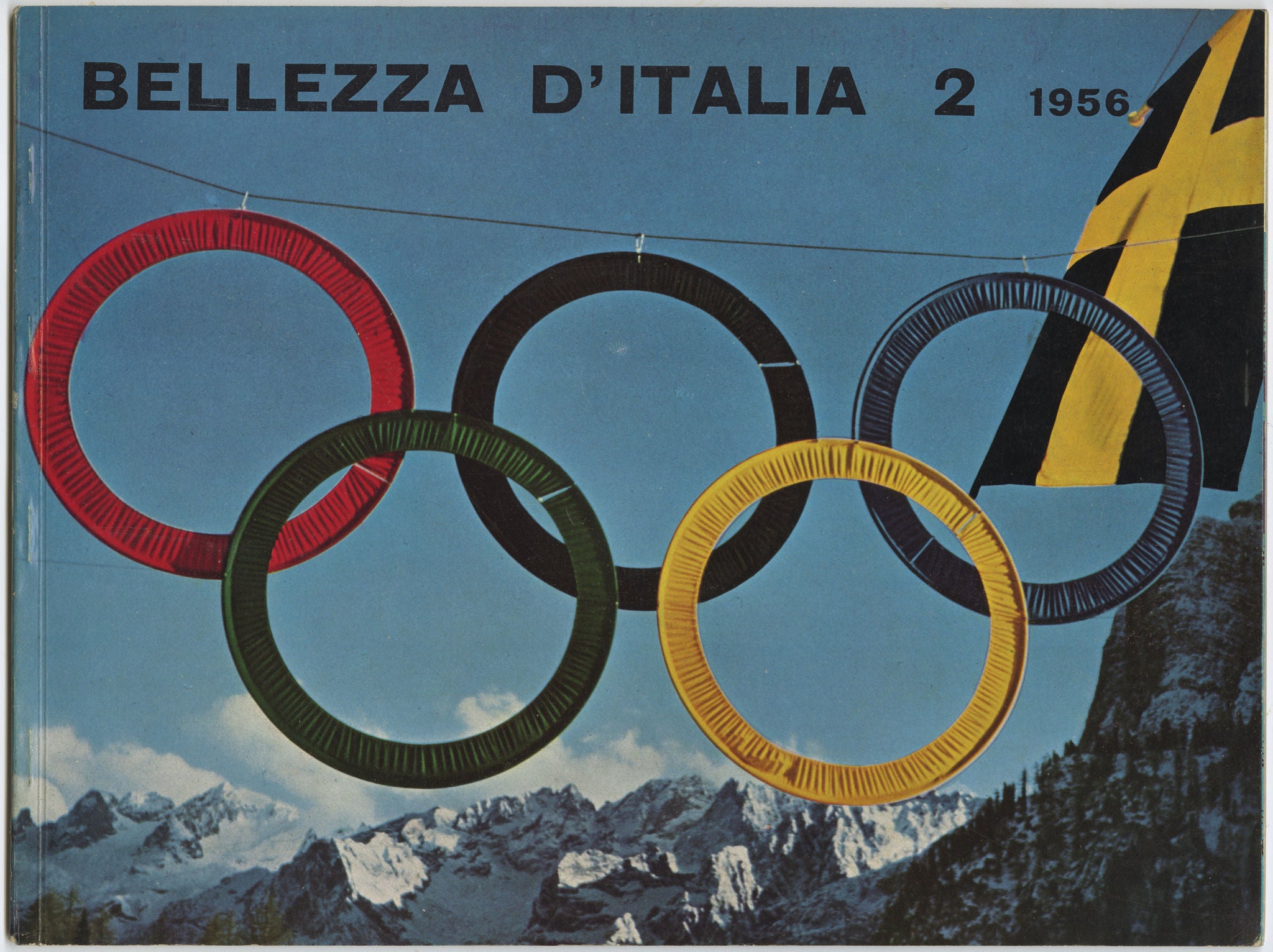
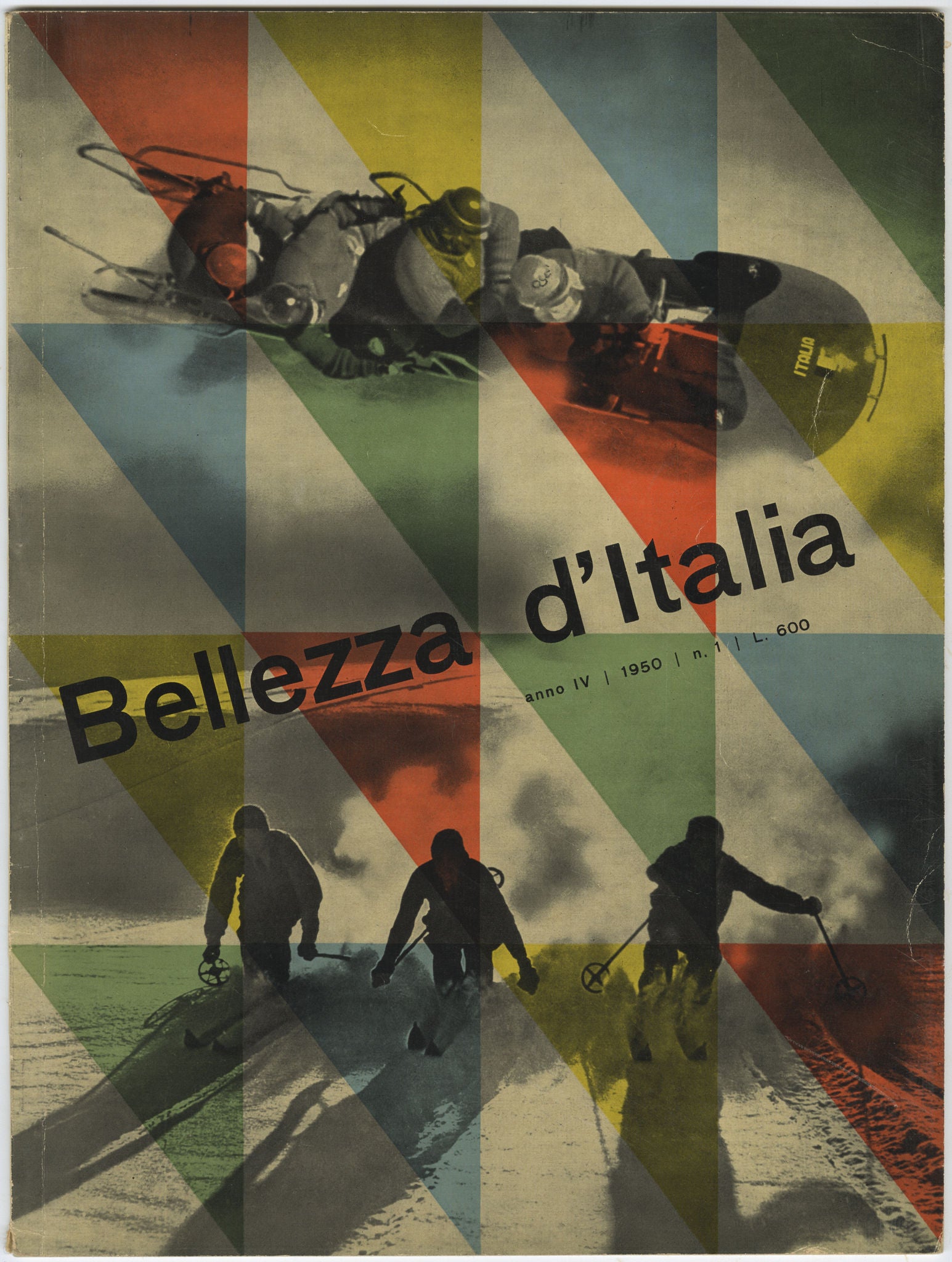
Bellezza d’Italia, n. 2, 1956

From 1955, under the direction of Lino Pellegrini, Bellezza d’Italia adopted an original horizontal format and, from the following year, included translations into English, French, German and Spanish, reflecting its international outreach. The second issue of Bellezza d’Italia in 1956 is dedicated to the 7th Winter Olympic Games, held in Cortina d’Ampezzo.

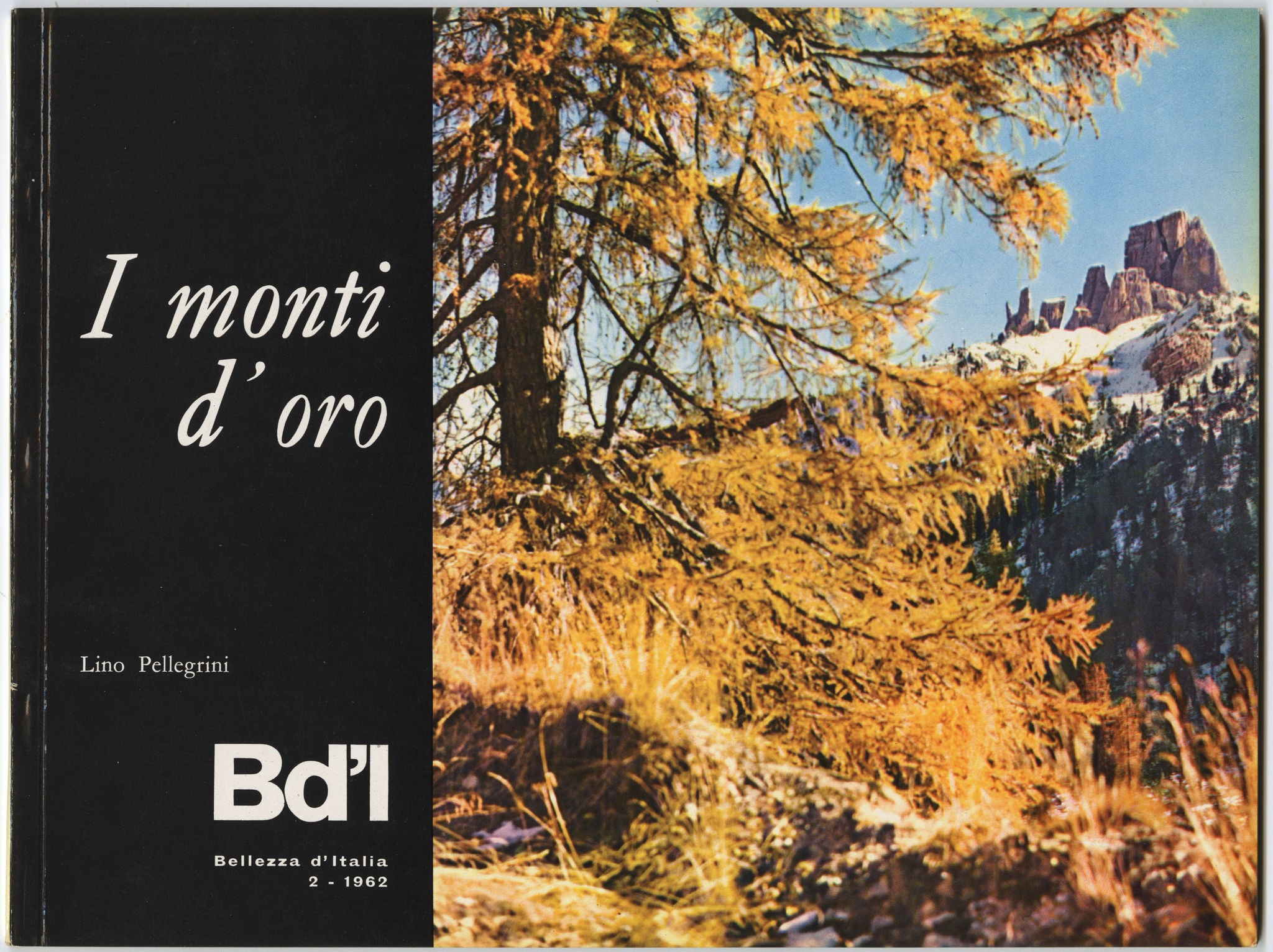
Bellezza d’Italia, no. 2, 1962, I monti d’oro

The editorial venture continued until at least 1962, with more than 70 issues published, and was crowned in 1955 with the Palma d’Oro della Pubblicità, a prestigious advertising award. This recognition confirmed Franco Dompé’s role as an innovator in communication, through a magazine open to experimentation in language and in dialogue with the culture of its time.